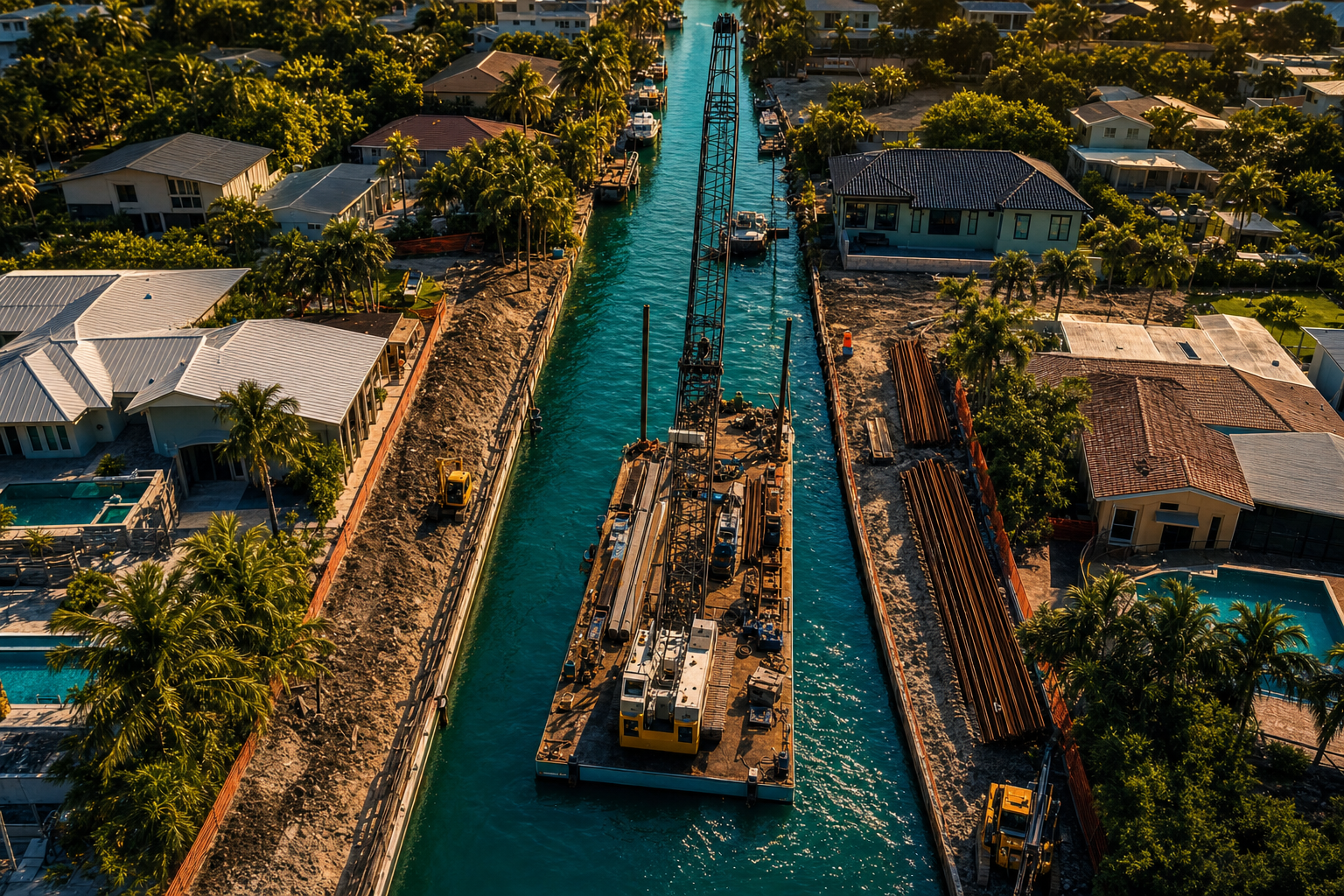
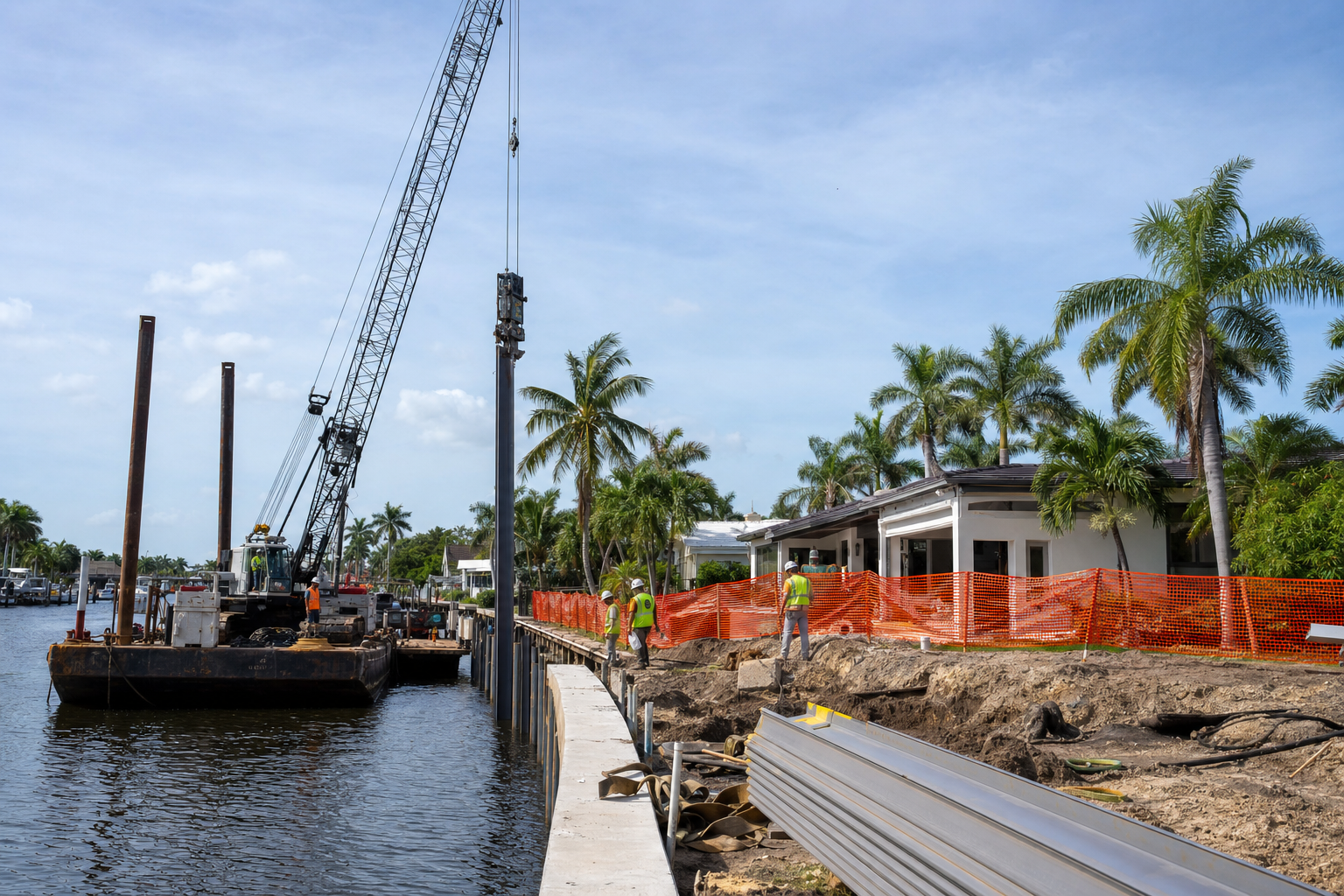
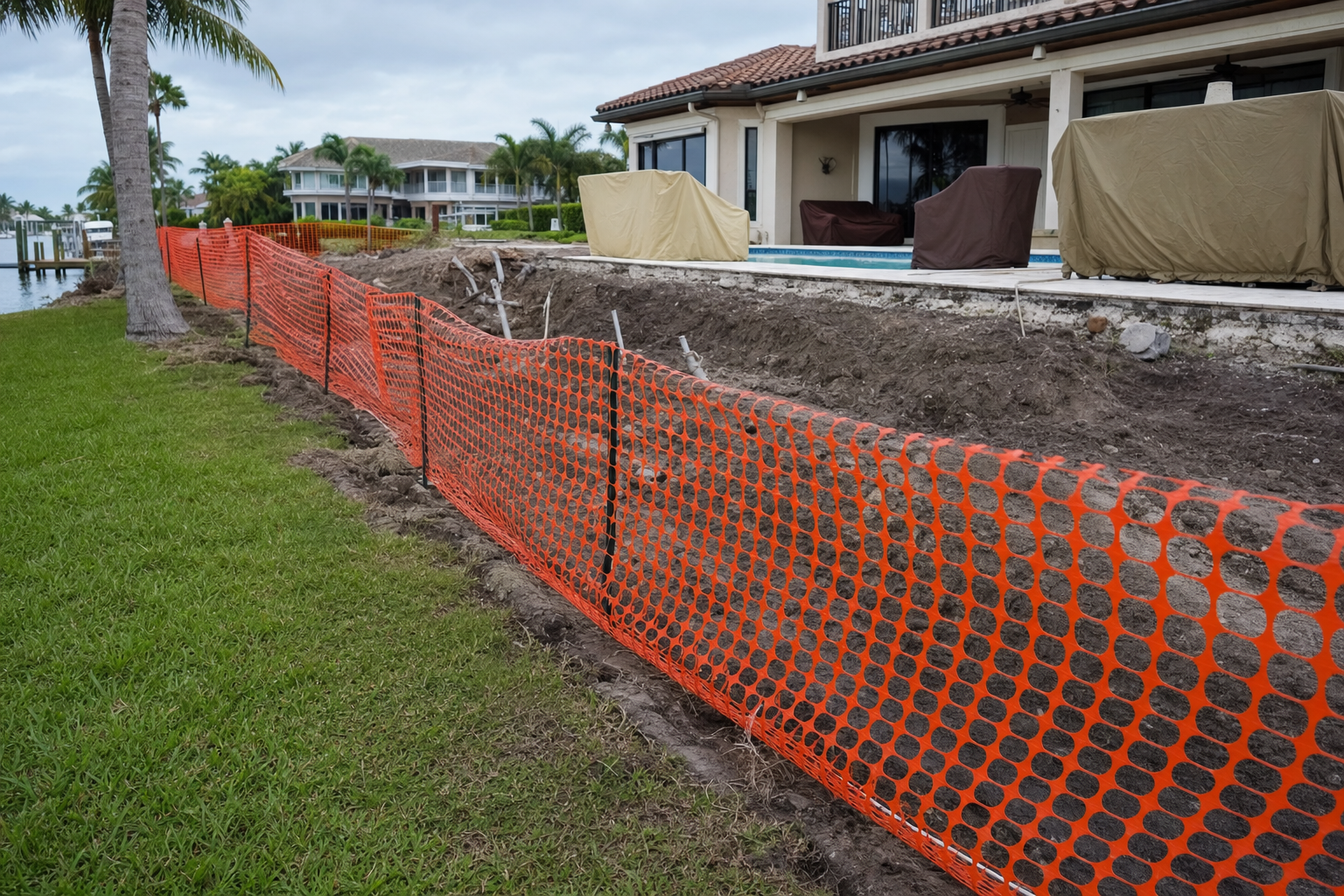
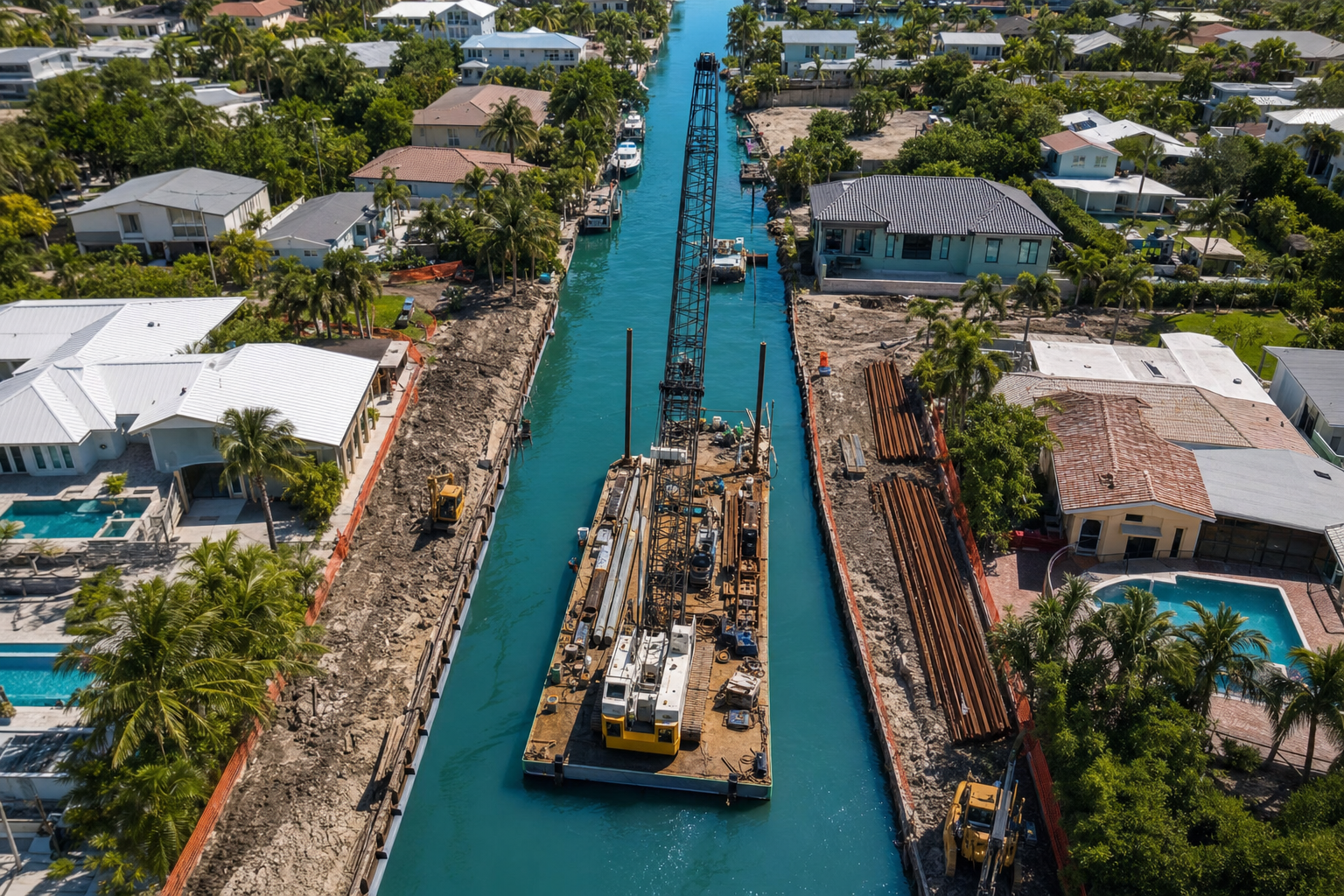
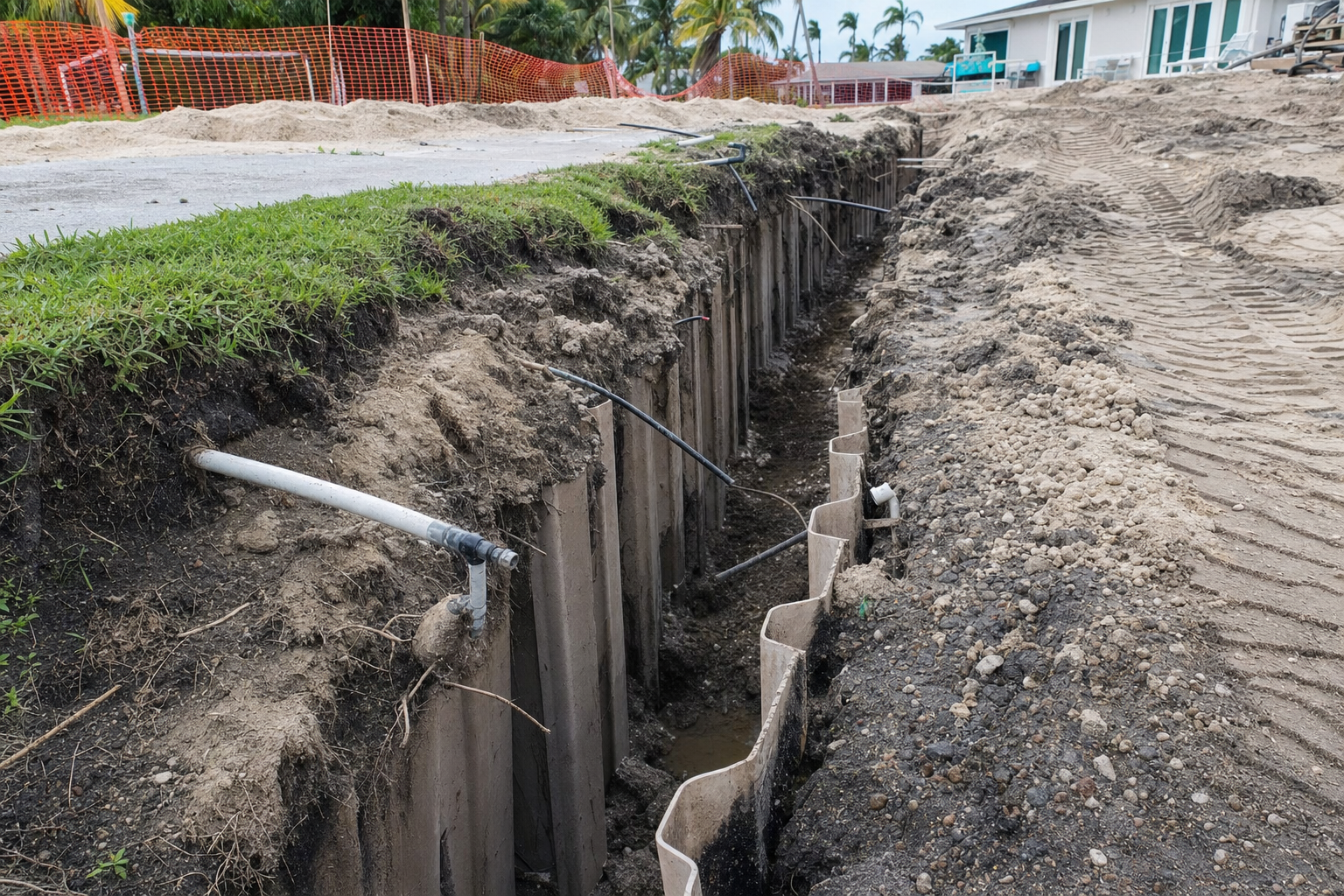
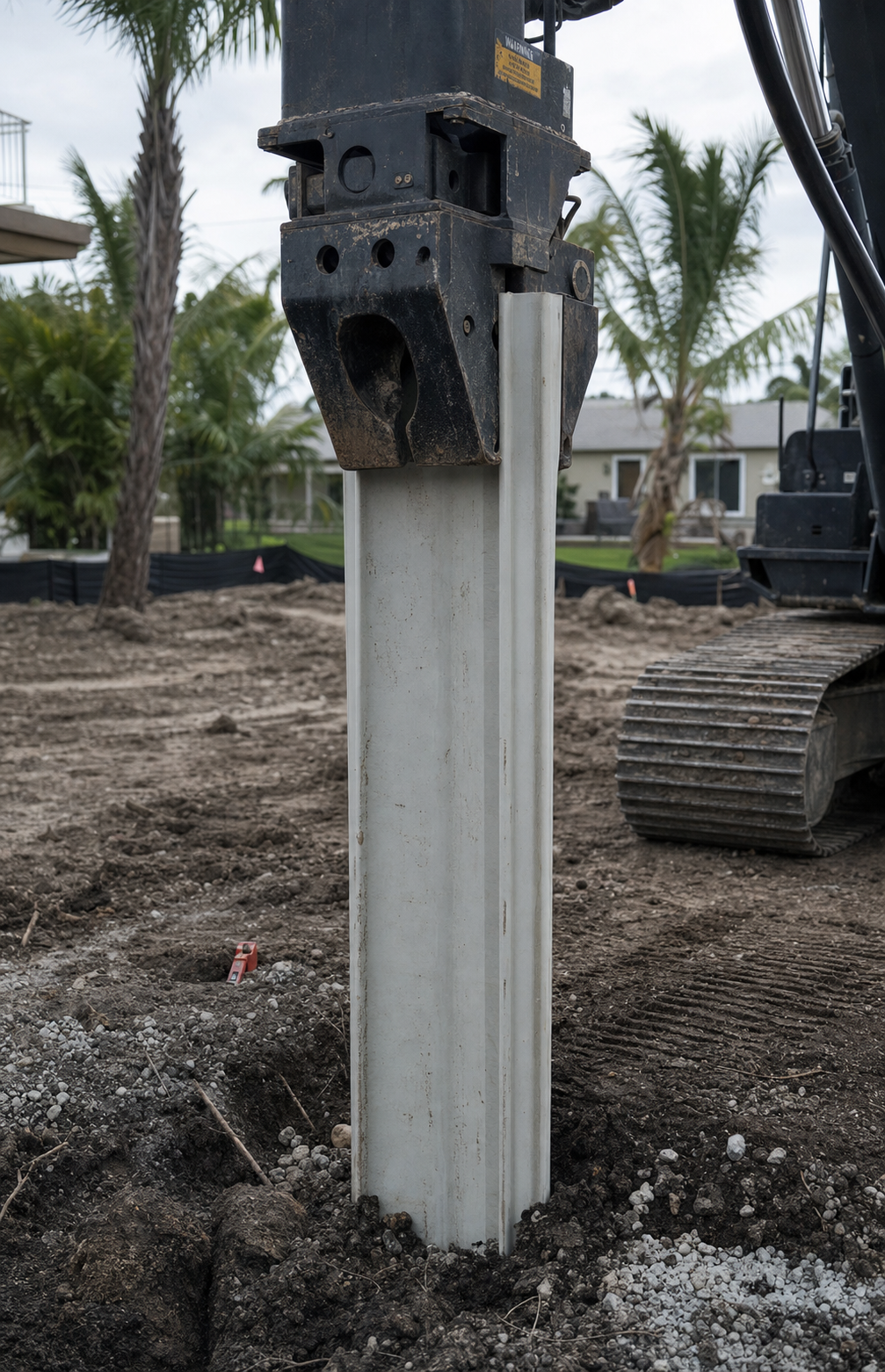
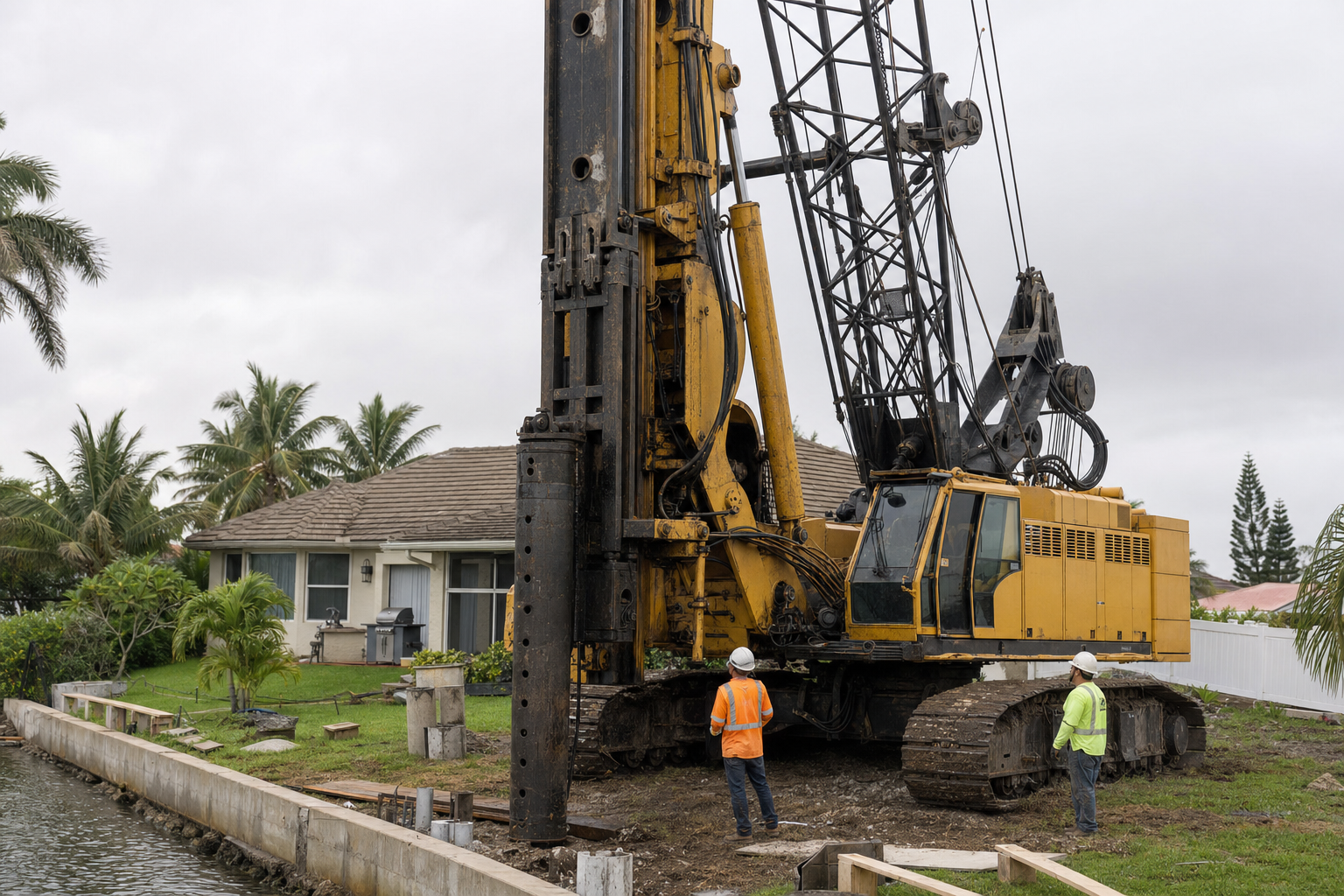
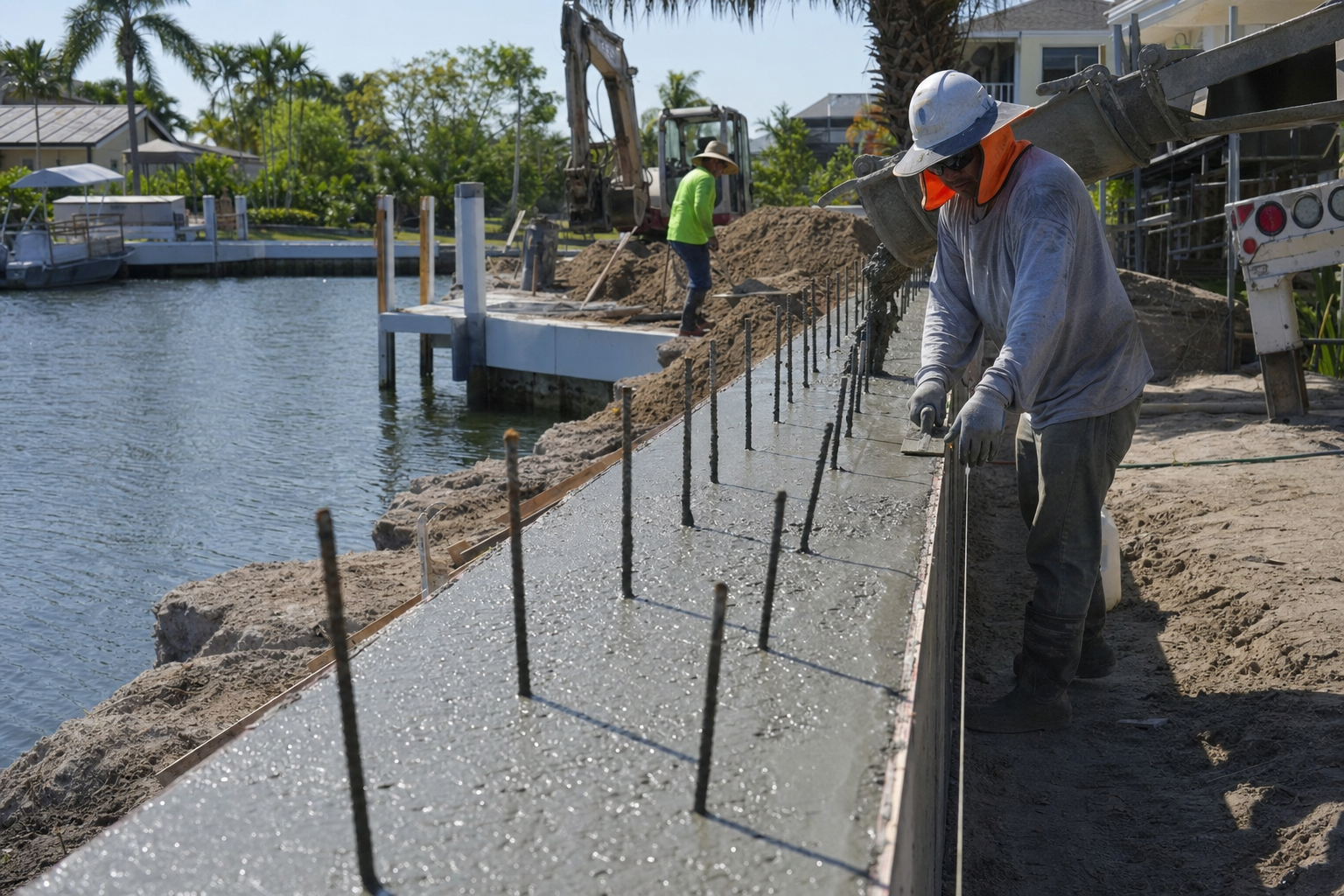
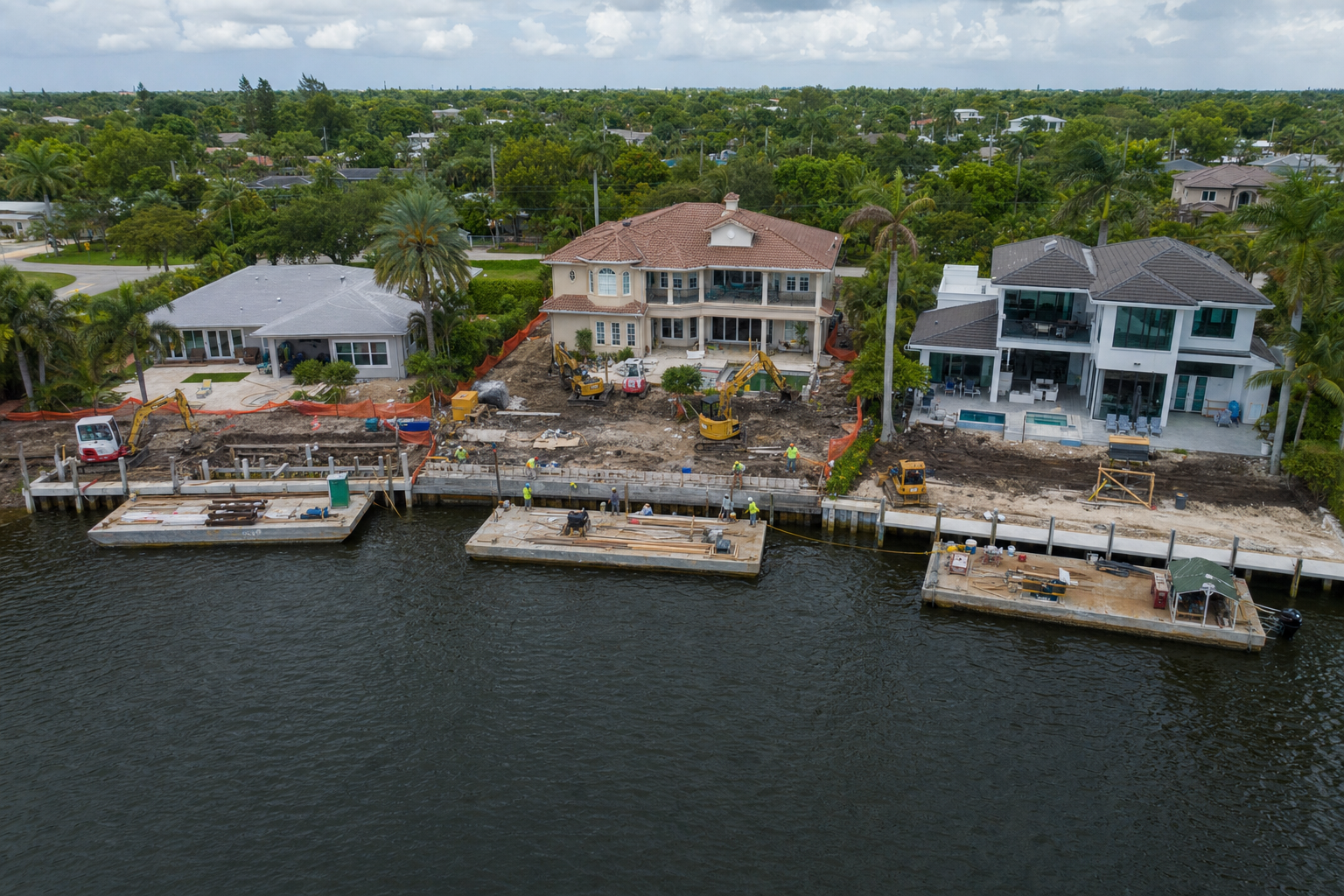
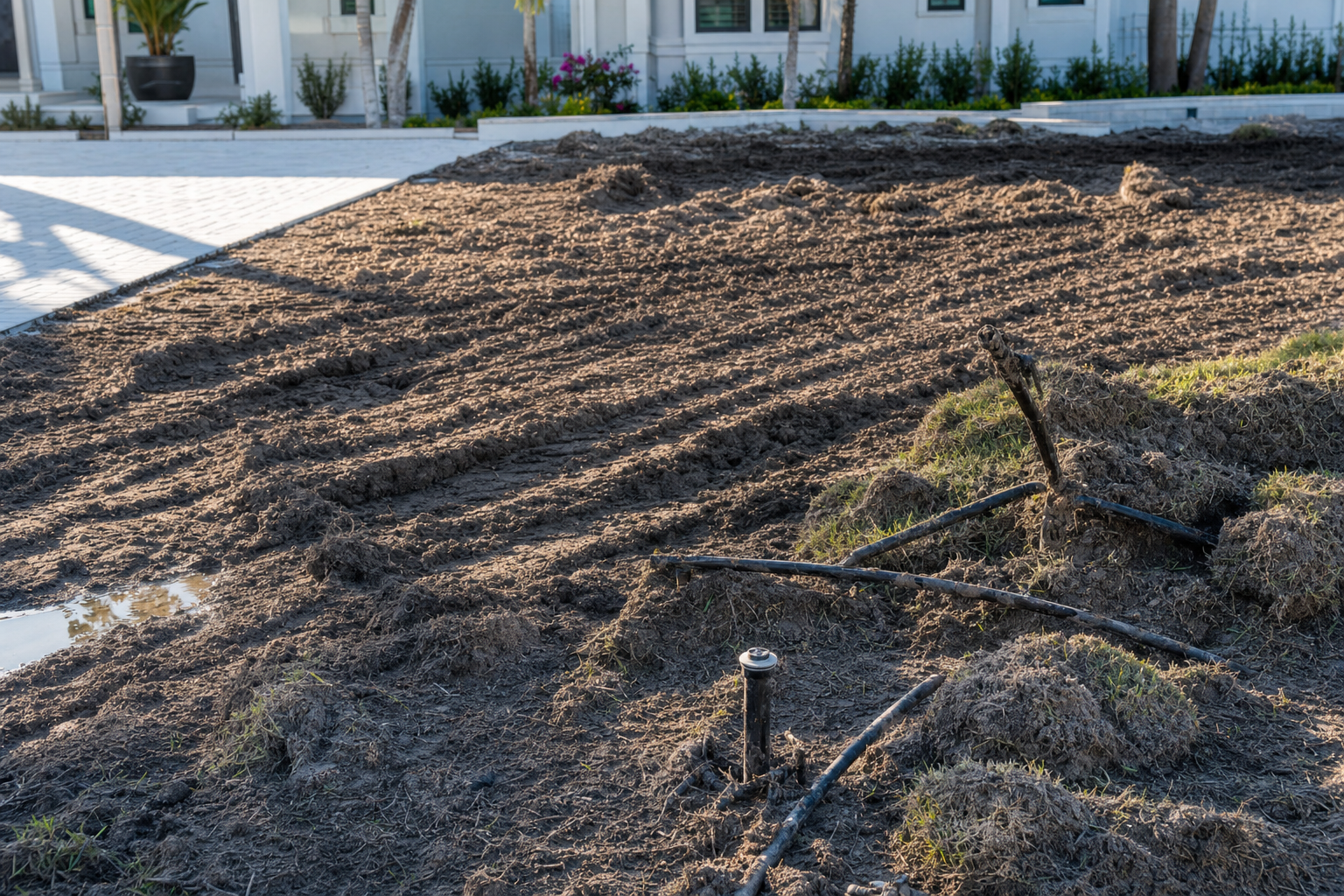
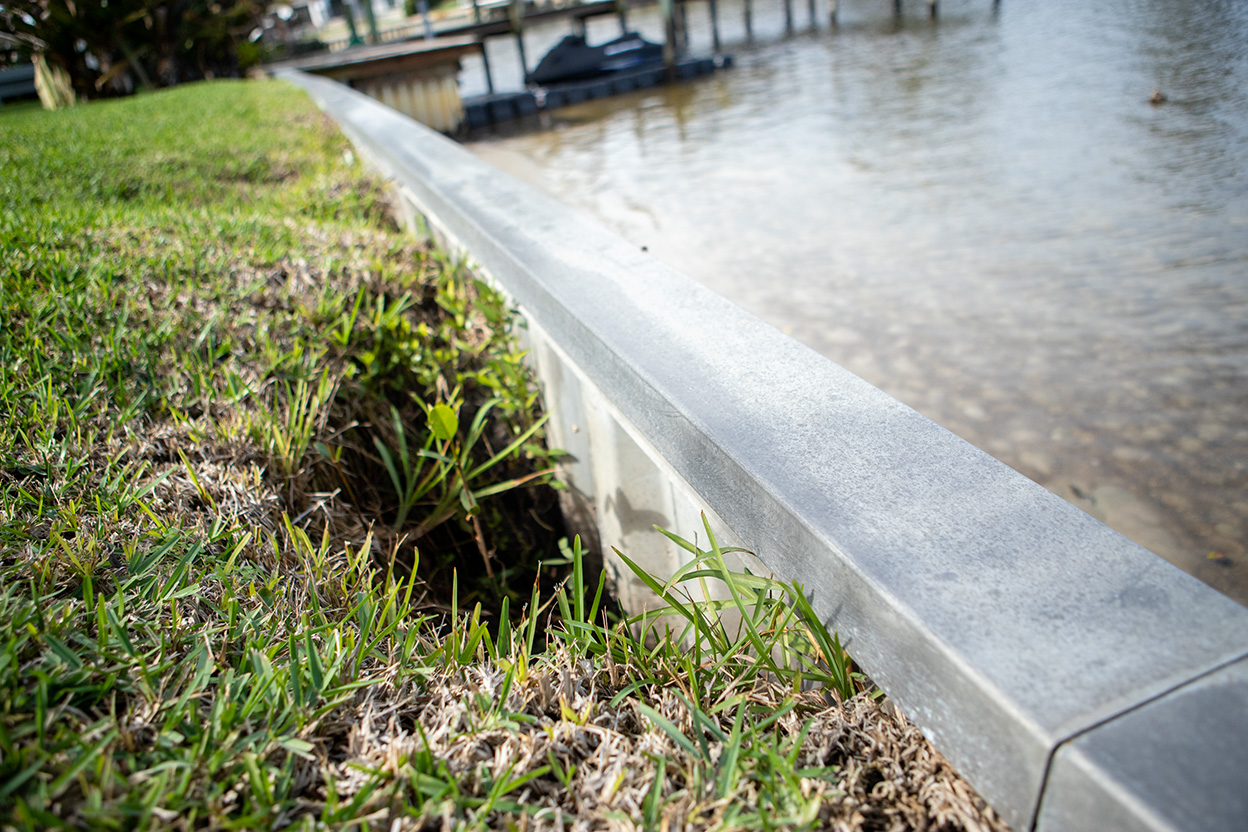
Coastal and geotechnical engineers don’t treat soil loss as a hypothetical. When they spec a seawall’s design life, embedment depth, tieback spacing, and panel section modulus, they are explicitly factoring in active soil erosion, scour at the toe, and settlement of the retained fill over the wall’s service life. Florida-specific design references like FDOT’s Structures Design Manual and standard practice guides like the ASCE Waterfront Facilities Inspection & Assessment manual require engineers to assess scour, settlement, and “loss of backfill” on every inspection — not as edge cases, but as standard service-life inputs.
“The wall is sized for the soil it’s going to have, not the soil it has on day one.”
- Embedment depth is calculated assuming the seabed in front will scour down 1–3 ft over the wall’s life.
- Tieback / anchor loads are calculated assuming the retained soil is partially saturated and partially evacuated through the wall over time.
- Cap reinforcement is sized for differential settlement of the fill behind it — i.e., the engineer is already assuming the soil will subside.
If erosion is built into the engineering math, why is it excluded from every workmanship warranty in the state? Because the contractor isn’t the engineer. The contractor warrants the install. The engineer assumes the erosion. You, the homeowner, get to absorb the gap between those two — unless you address the soil directly. That’s what an erosion warranty is for.